
One of the most rewarding aspects of architecture is recognising that every material decision influences how a space is experienced long after construction is complete. While materials often define the visual identity of a project, their true value lies in how they perform over time, support everyday life, and contribute to the longevity of the built environment.
A recent residential project reminded us of this principle in a meaningful way.
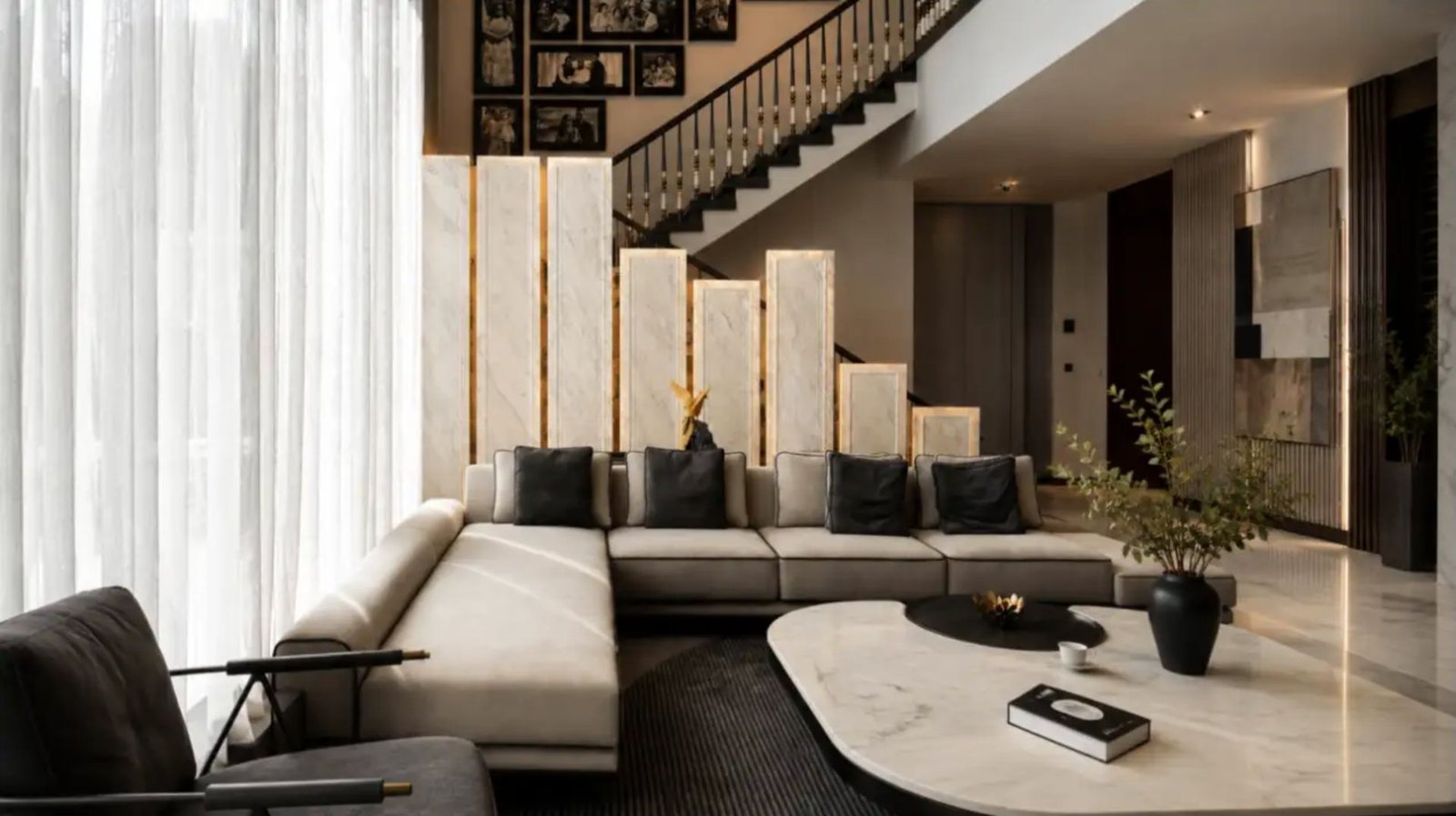
The brief was to create a home that reflected understated luxury while remaining practical for everyday living. Every material selection became a careful balance between aesthetics, functionality, durability, and maintenance. Rather than choosing finishes purely for their visual appeal, we focused on how they would age, respond to daily use, and continue to enhance the living experience for years to come.
Natural stone was introduced in key areas to bring a sense of permanence, elegance, and timeless character. Beyond its refined appearance, it offered exceptional durability and the ability to withstand everyday wear without losing its integrity.
Warm wood finishes added balance throughout the interiors, creating an atmosphere that felt welcoming and comfortable while introducing texture and depth. Carefully detailed metal accents contributed precision and sophistication, complementing the overall architectural language without overwhelming it. Expansive glass openings maximised natural daylight, strengthened the relationship between interior and exterior spaces, and created an environment that felt open, calm, and connected to nature.
Equally important was understanding how the homeowners would interact with these spaces.
Designed for a family that frequently entertains guests, the residence needed materials capable of handling constant use while maintaining their appearance and performance. Every decision was guided not only by design intent but also by the realities of everyday living. The result was a home that feels refined yet effortless to inhabit.
A contrasting experience came through one of our commercial projects, where the priorities shifted significantly.
Commercial environments present an entirely different set of challenges. High footfall, continuous use, and operational efficiency demand finishes that are exceptionally durable, easy to maintain, and capable of retaining their quality over extended periods. In these spaces, material selection becomes as much about performance as it is about creating a strong visual identity.
Although the residential and commercial projects differed in function, they reinforced the same fundamental lesson.
Materials are never simply decorative elements. They influence comfort, acoustics, light, maintenance, durability, sustainability, and ultimately the way people experience a space every single day. A successful material palette does more than complete an aesthetic vision it creates environments that remain functional, resilient, and relevant throughout their lifecycle.
As architects, our responsibility extends beyond designing beautiful spaces. It involves selecting materials that respond thoughtfully to climate, context, user behaviour, and long-term performance. Every finish, texture, and surface contributes to a larger narrative about how architecture serves the people who occupy it.
The most successful projects are not defined by the most expensive materials or the latest design trends. They are defined by thoughtful choices that balance beauty with practicality, innovation with longevity, and aesthetics with purpose.
Because great architecture is remembered not only for how it looks on the day it is completed, but for how well it continues to perform and enrich everyday life for decades to come.