
Transparency in Contemporary Architecture
In this blog, Ar. Rajkumar Kumawat delves into the evolving role of glass in modern architecture. What was once considered a fragile material has now become a cornerstone of contemporary design, valued for its ability to dissolve boundaries, bring in natural light, and transform spatial experiences. Glass façades and interiors today represent far more than sleek aesthetics; they symbolize openness, sustainability, and innovation.
The Rise of Glass as a Design Language
Over the last few decades, glass has emerged as one of the most widely used materials in global architecture. Its transparency blurs the distinction between inside and outside, creating immersive experiences for occupants. Beyond aesthetics, advances in structural engineering and glazing technologies have expanded glass’s applications, from towering skyscrapers to intimate residences. For architects like Kumawat, glass offers a canvas where structure and atmosphere converge seamlessly.
Daylight as a Design Asset
One of the greatest advantages of glass is its relationship with natural light. Glass façades invite daylight deep into interiors, reducing dependence on artificial lighting and improving occupant well-being. Studies consistently show that access to daylight enhances productivity, mood, and health. Rajkumar Architects often use glass strategically to create interiors that shift with the rhythm of the day, where light itself becomes an active participant in shaping the atmosphere.
Sustainability and Performance
While glass has sometimes been criticized for increasing heat gain, modern technologies, such as double glazing, low-emissivity coatings, and smart glass, have redefined its performance. Today, glass can significantly improve energy efficiency, acting as insulation while still allowing light transmission. Ar. Rajkumar Kumawat highlights that sustainability is not about rejecting modern materials but about using them responsibly, ensuring they meet performance criteria while enriching human experience.
Glass as an Aesthetic Metaphor
Beyond function, glass carries a powerful metaphorical weight. It symbolizes transparency, openness, and connection. In residential design, a glass wall overlooking a courtyard creates a dialogue between nature and shelter. In commercial spaces, glass signifies progress and forward-thinking. For Rajkumar Architects, glass is never just a surface, it is a narrative device, telling stories of clarity, fluidity, and aspiration.
Case Studies and Global Examples
Globally, architecture has seen iconic projects that leverage glass innovatively. From the Louvre Pyramid in Paris to Apple’s flagship stores, glass has redefined how people interact with architecture. In India, too, glass has become central to contemporary skylines, balancing modern identity with cultural contexts. Rajkumar Architects integrate glass in ways that respect both global aspirations and local sensibilities, ensuring their projects remain rooted yet modern.
Rajkumar Architects’ Perspective
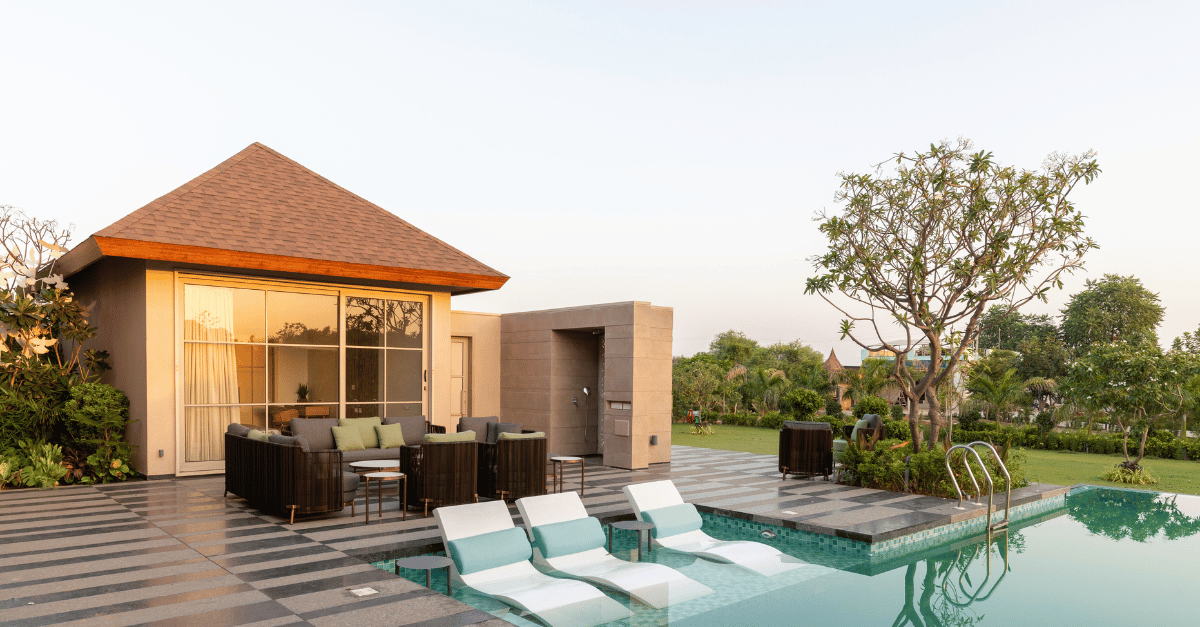
At Rajkumar Architects, the use of glass is guided by intentionality. Whether designing residences or commercial buildings, the practice focuses on how glass can create emotional resonance,be it a sun-drenched living room, a double-height atrium that celebrates volume, or a façade that glows at night like a lantern. For Kumawat, the power of glass lies in its ability to craft atmospheres that feel timeless and transformative.
Challenges and Considerations
Working with glass also requires thoughtful consideration of privacy, glare control, and maintenance. Architects must balance openness with comfort, using shading devices, louvers, and layered façades. This delicate balance ensures that transparency does not compromise usability. Rajkumar Architects emphasize designing with nuance, where glass amplifies experience without overwhelming it.
Conclusion: A Transparent Future
In conclusion, Ar. Rajkumar Kumawat emphasizes that glass represents the future of human-centered design, where buildings breathe with light, engage with their context, and symbolize openness. Transparency in architecture is more than a design choice; it is a philosophy of building trust, clarity, and connectivity. For Rajkumar Architects, the “glass haven” is not just about façades, it is about designing spaces that embody vision, light, and the poetry of openness.