
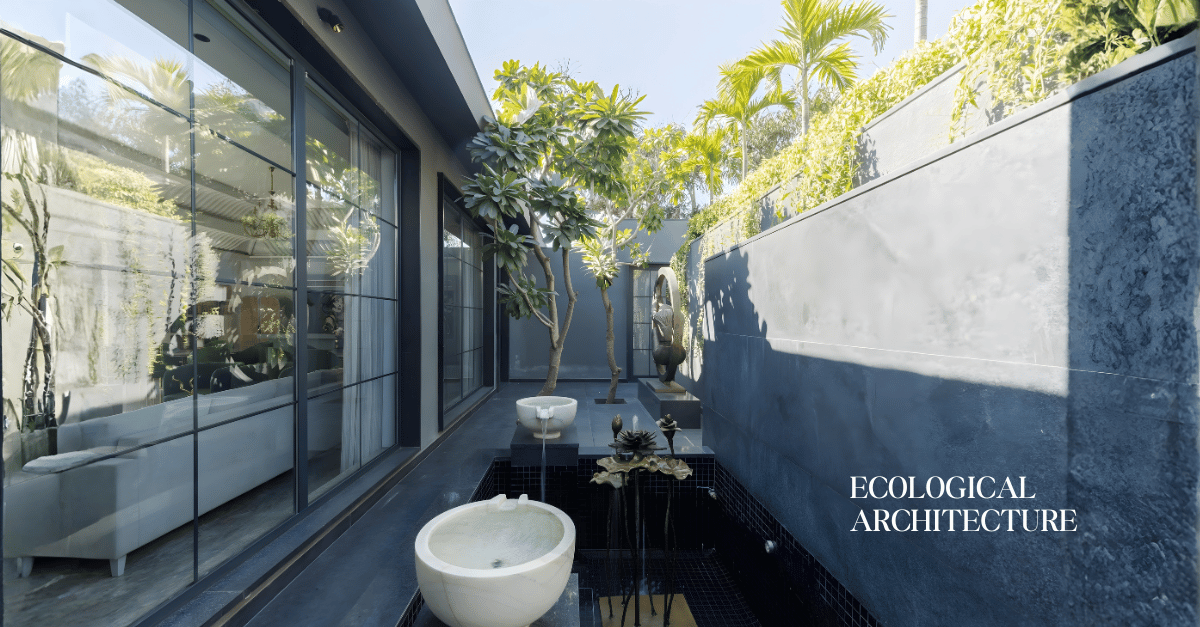
In an era where the built environment often seems to stand apart from the natural world, we at Rajkumar Architects believe in bridging that divide. To us, architecture is not merely a human construct, it is a dialogue between form, function, and the forces of nature. Ecological architecture is about designing with awareness, empathy, and respect for the environment that sustains us. It is not defined by technology or trends alone but by a mindset that seeks equilibrium, where buildings coexist with ecosystems and evolve as extensions of their surroundings.
At Rajkumar Architects, we have always been guided by this philosophy. From our earliest projects in Jaipur to our recent residential and institutional works, we strive to create spaces that breathe, respond, and belong. Our approach embraces contextual sensitivity, natural light, local materials, and passive design techniques that make architecture feel organic rather than imposed. For us, ecological architecture is both an ethical commitment and an aesthetic choice, one that celebrates the harmony between modern living and natural intelligence.
The Essence of Ecological Architecture
Ecological architecture begins with a simple yet profound principle, that every building is a living part of the ecosystem it inhabits. It must listen to its climate, respect its context, and contribute positively to its environment. This idea goes beyond sustainability; it is about creating regenerative systems that heal rather than harm. At Rajkumar Architects, we let every project grow from its site. We observe the land, the wind patterns, the sun path, and the natural vegetation before we draw the first line. A building, in our view, should converse with its surroundings, framing views, welcoming breezes, and filtering light in ways that feel natural. We prioritise passive design strategies over mechanical dependence. Features such as shaded verandahs, courtyards, jalis, and cross-ventilation systems are intrinsic to our design language. These not only reduce energy consumption but also enrich the spatial experience, creating homes that feel comfortable throughout the seasons. Material choice is central to ecological architecture. We favour local, low-embodied-energy materials, sandstone, brick, lime, reclaimed wood, that age gracefully and connect the structure to its geography. Our detailing celebrates texture and honesty, allowing materials to express their natural character rather than concealing it behind layers of polish.Integration with Landscape
Nature is not an external backdrop but a vital participant in our designs. We integrate green courts, shaded patios, and water elements to encourage biodiversity and micro-climatic comfort. This blurring of indoor and outdoor realms fosters a deeper human connection to nature, a quality we believe is essential for well-being.
From Philosophy to Practice
Every ecological design principle finds life through thoughtful application. In many of our Jaipur projects, orientation plays a key role. We design elongated east-west facades to minimise heat gain, while generous north openings invite soft daylight. Deep overhangs, pergolas, and recessed fenestrations protect interiors from harsh sunlight while maintaining openness.
Our use of courtyards goes beyond aesthetic appeal, they act as natural light wells and temperature regulators. By placing greenery at the heart of the plan, we encourage air circulation and create calm, contemplative spaces that remain connected to the outdoors.
We also incorporate water management strategies such as rainwater harvesting, greywater reuse, and drip irrigation systems to reduce wastage and maintain self-sustaining landscapes. Solar panels and energy-efficient fixtures complement these passive techniques, ensuring our designs perform as responsibly as they appear beautiful.
Why Ecological Architecture Matters
The urgency of climate change has turned ecological architecture from an ideal into a necessity. As cities grow denser and resources scarcer, our role as architects becomes more critical. Buildings account for a significant percentage of global energy use and carbon emissions, yet they also hold the potential to be part of the solution. By designing in harmony with nature, we can create spaces that are healthier, more resilient, and inherently human.
At Rajkumar Architects, we see this as a responsibility as much as an opportunity, to inspire change through design that balances luxury with sustainability, and innovation with heritage. A building that breathes naturally, cools itself, and welcomes light gracefully is not only efficient but also emotionally fulfilling. It reminds us that comfort and conscience can coexist beautifully.
Bridging Aesthetics and Ecology
One of our guiding beliefs is that ecological architecture need not compromise on elegance. The Twin Residence and The Grand Colonnade, for instance, embody the confluence of modern sophistication and environmental mindfulness. Both projects integrate local materials, passive cooling systems, and verdant courtyards, transforming functional strategies into design statements.
These homes stand as examples of how sustainability can enhance rather than dilute architectural expression. When designed thoughtfully, ecological elements like shading, greenery, and natural ventilation become intrinsic to a space’s identity, creating timeless, contextually rich environments that age gracefully.
Looking Ahead: A Future Rooted in Balance
As we look to the future, we envision architecture that restores rather than depletes, spaces that serve not only their occupants but also their ecosystems. Ecological design is not a style; it is a way of thinking, of designing with empathy. It challenges us to reimagine the relationship between people, place, and planet.
At Rajkumar Architects, we continue to refine our methods and materials, exploring how innovation can coexist with vernacular wisdom. Each project becomes a dialogue, between nature’s intelligence and human creativity. Our goal is to craft environments that are efficient, enduring, and emotionally resonant, places where architecture and ecology are not in opposition, but in perfect harmony.